
 Immersive training
Le Correctif
Problem solving · 8D method
You won’t recite the 8D. You’ll live it.
A day in the shoes of the problem-solving team at Aerolink, a manufacturer of electrical harnesses for the aerospace industry. A customer alert, a production line at risk of being stopped, and four colleagues who each hold part of the truth. And a part to protect.
- 1 day, on site
- 12 participants, 3 teams of 4
- Physical board and tablet app
- 2 QALIA facilitators
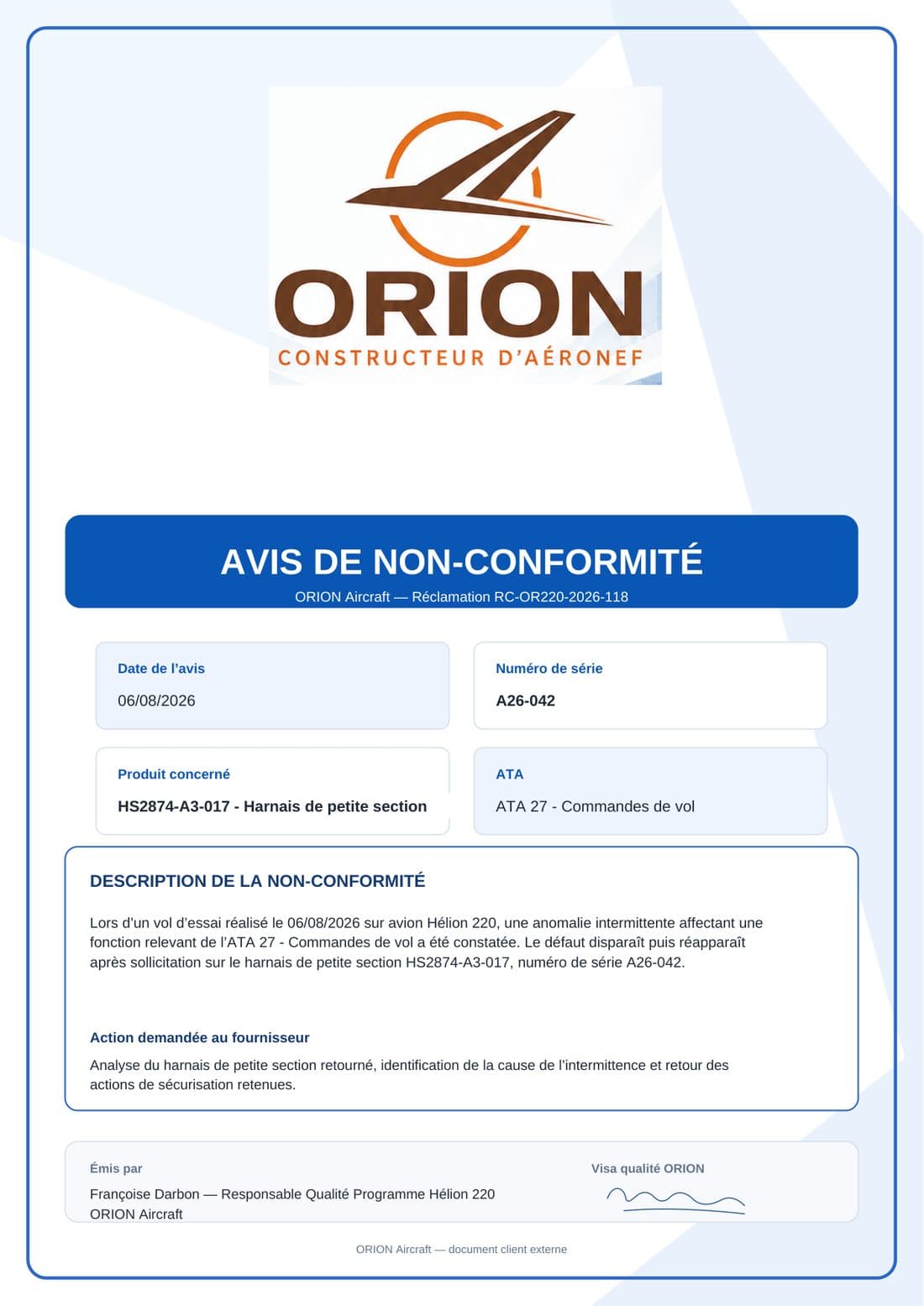
An aircraft manufacturer reports an in-flight anomaly. The harness at fault came out of the Aerolink factory. The investigation begins.
You don’t solve a problem by reading a method.
The 8D, the 5W2H, the Ishikawa: most quality teams know the steps. But faced with a real customer complaint, with delivery pressure, incomplete facts and colleagues on the defensive, the reflexes don’t follow. People jump to the cause. They mistake containment for the corrective action. They check that the action has been done, rarely that it worked.
What conventional training installs
Knowledge of the steps. You can draw a fishbone, fill in a 5W2H, list the eight disciplines. On a textbook case, clean and complete, where all the information is already on the table.
What the field demands
Judgement under pressure. Describing the facts before looking for a culprit. Containing the problem before treating it. Finding out why the defect was produced, and why it was not seen. And dealing with people who all have something to defend.
Five confusions the day clears up
- 01
Looking for the cause before describing the facts
The 5W2H and the IS / IS NOT set the boundaries of the problem. They do not point to the cause: they stop you looking for it in the wrong place.
- 02
Taking containment for a corrective action
Sorting the stock, inspecting 100%: that is protecting the customer. The cause, however, is still there.
- 03
Forgetting non-detection
A defect at the customer is a defect that was produced and a defect that was not seen. A robust plan addresses both.
- 04
Mistaking a completed action for an effective one
Implementation is verified action by action. Effectiveness is judged on the whole plan, against the objective set at the outset.
- 05
Lowering the severity in the FMEA
Corrective action reduces occurrence and improves detection. The severity of a defect, however, does not change.
The gap between the two does not close with one more slide deck. It closes by working through the problem, from the alert to closure.

« A problem is never purely technical. »
Immersion is not a wrapper. It is the condition for learning.
Participants don’t study a case: they go through it. They enter a factory, question its teams, cross-check documents, and only unlock each step by succeeding at it. Four combined levers, one requirement: engagement.
Escape game
Codes, padlocks, sealed envelopes. You only move on by validating the current step: there is no skipping ahead in the 8D, exactly as in real life.
Board game
A 3D-printed board for each tool: team composition, 5W2H and IS / IS NOT, dual-entry Ishikawa, weighted vote. Decisions become visible, and therefore open to discussion.
Tablet app
The game master. The factory plan to explore, the staff videos, the documents that arrive as the investigation unfolds, and time passing: “3 months later…”.
Role-play
Each player embodies a member of the team, with their role, interests and constraints. Everyone has their own view of the problem… and a position to defend.

What’s in the box
A complete, ready-to-use kit per team. No technical preparation on your side.
- 13character cards, the factory’s staff
- 4confidential character files, one per player
- 32“potential cause” cards
- 12“corrective action” cards
- 53D-printed Ishikawa stands, one per M
- The team composition, 5W2H and weighted vote boards
- A padlocked box, and what it holds
- 1tablet, giving access to the app
This is not a passing fashion.
The design rests on three lines of thought: two that ground learning through experience, and one that sheds light on what quality methods often leave aside, the interplay of actors.
Pierre Pastré
Professional didactics
Real activity, not theoretical knowledge, is the starting point of professional competence.
David Kolb
Experiential learning
Experience only becomes learning once it has been lived, observed, conceptualised, then played out again.
Michel Crozier & Erhard Friedberg
Strategic analysis of organisations
Every actor pursues rational objectives under constraint, drawing on what they alone control. A dysfunction can also be read in those games.
This approach extends the Q-SYNQ® philosophy of QALIA Performance: bringing quality engineering together with an understanding of human dynamics inside organisations.
You are Aerolink’s problem-solving team.
One assignment across a single day: handle a customer complaint from start to finish, from the alert to the update of the risk analysis. The eight disciplines of the 8D, in order, with no shortcuts.
Your role
Member of the cross-functional problem-solving team at Aerolink, a manufacturer of aerospace electrical harnesses.
Your assignment
Characterise the defect, protect the customer, find the root causes, address them, and prove the matter is resolved.
Your constraint
A customer waiting, a production line at risk of being stopped, facts scattered across the whole factory. And colleagues who don’t tell you everything.
The 8 disciplines of the 8D
1 day · 3 teams in parallelMorning
D0→D4
Understand and contain
From the alert to the cause analysis: build the team, establish the facts, protect the customer, then trace back to the root causes.
- D0Receive the alertA video from the quality manager, the customer’s non-conformity notice, the harness traceability. The team discovers the crisis.
- D1Build the teamChoose, from the factory’s thirteen staff members, the four profiles who will make up the problem-solving team. The right choice unlocks the app.
- D2Characterise the problemExplore the factory, question its teams, cross-check the documents. Fill in the 5W2H and the IS / IS NOT table with facts, nothing but facts.
- D3ContainProtect the customer before treating the cause: the team decides which checks to put in place, and where in the factory to place them.
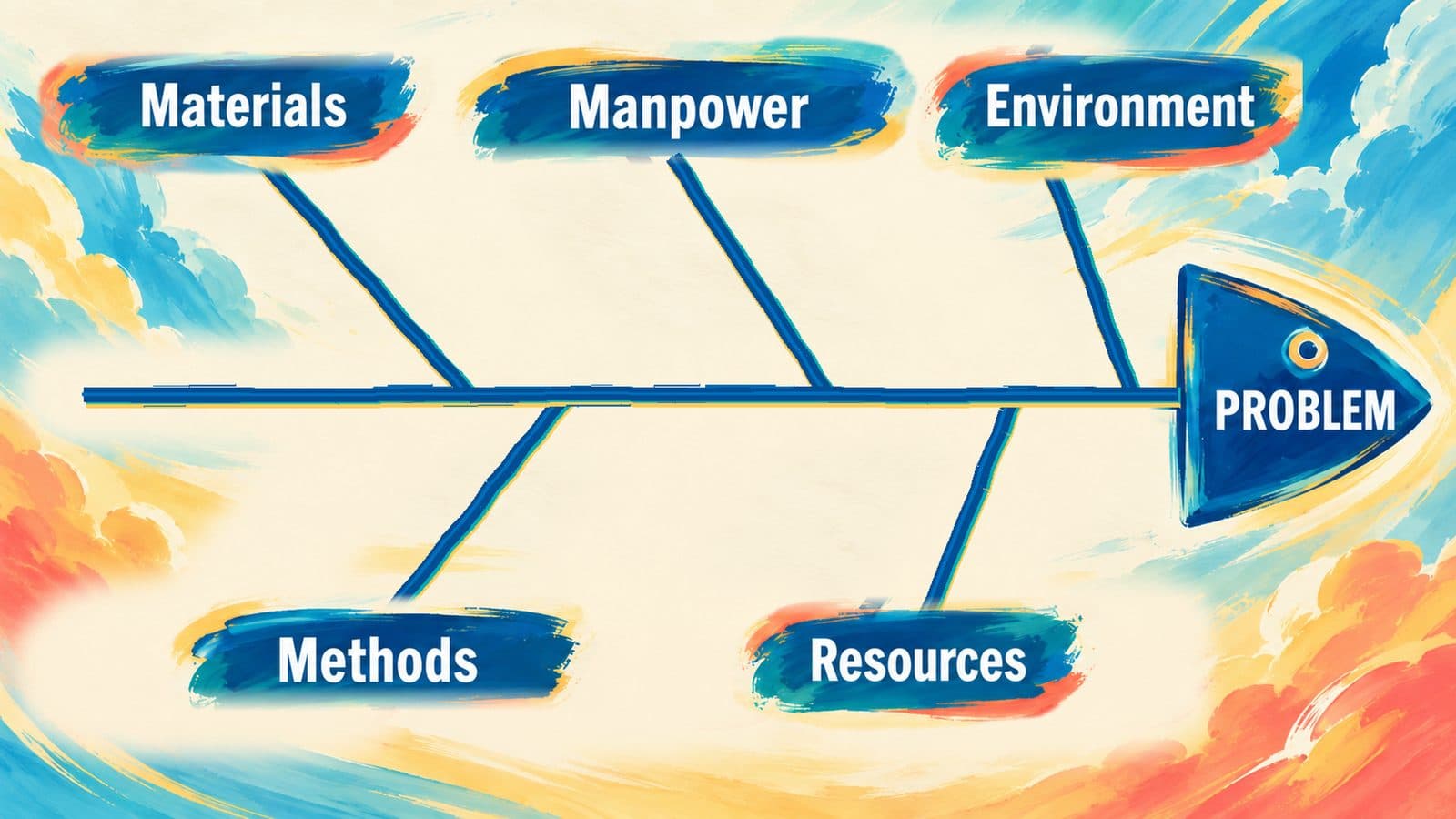
- D4Identify the root causesBuild a dual-entry 5M Ishikawa: why the defect was produced, and why it was not detected. Then decide by weighted vote.
Afternoon
D5→D8
Correct and capture the learning
From the action plan to closure: act, let time pass, verify in the field, and anchor what the problem has taught.
- D5Define the corrective actionsLink each selected cause to its actions and their owners. A plan that addresses occurrence and non-detection, or nothing.
- D6Verify implementation and effectivenessTime passes. The team goes back to the field to check that each action has been done, then that the plan has really worked, against the objective set at the outset.
- D7Capture the learningUpdate the process FMEA. Occurrence and detection may go down, severity never, and only once effectiveness has been proven.
- D8Close and recogniseEnd of the assignment and team rankings. Then the debrief: what played out in the method, and between the people.

Thirteen staff members, one factory to explore. Nobody will hand you the answer.
The investigation takes place in the Aerolink factory, from receiving to shipping. On the tablet, each zone of the plan opens a scene; each staff member tells you, on video, what they saw and what they know, and hands over their documents. It is up to the team to separate the facts from the impressions.
Aerolink’s staff
Thirteen functions, from the design office to shipping. Four of them will make up your team: it is up to you to find which.

Léa HOFFMANN
Quality manager

Mehdi AMRI
Design office

Claire MARTIN
Industrialisation

Lucas BERNARD
Procurement and receiving

Lin MEI
Kitting preparation
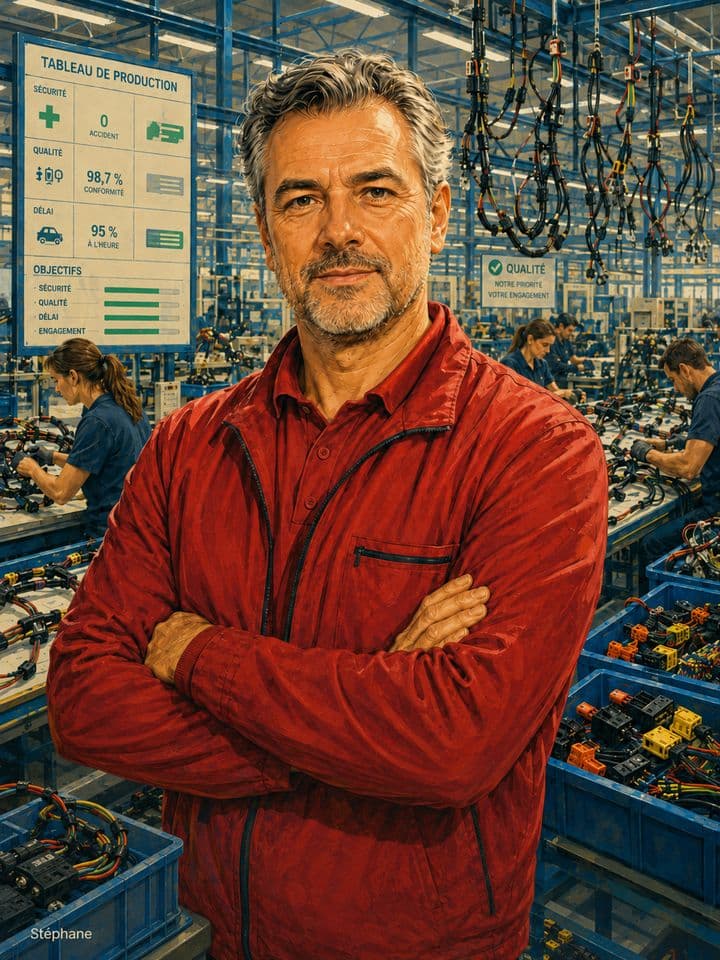
Stéphane DARDENNE
Production manager

Kevin RUIZ
Small Section Workshop
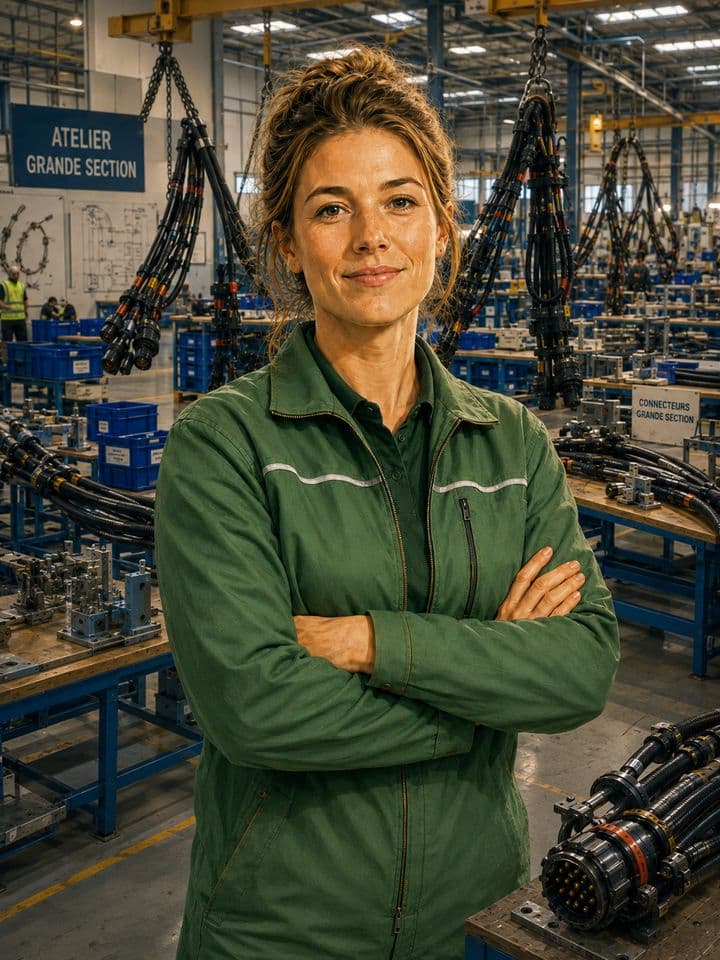
Emma LEROY
Large Section Workshop
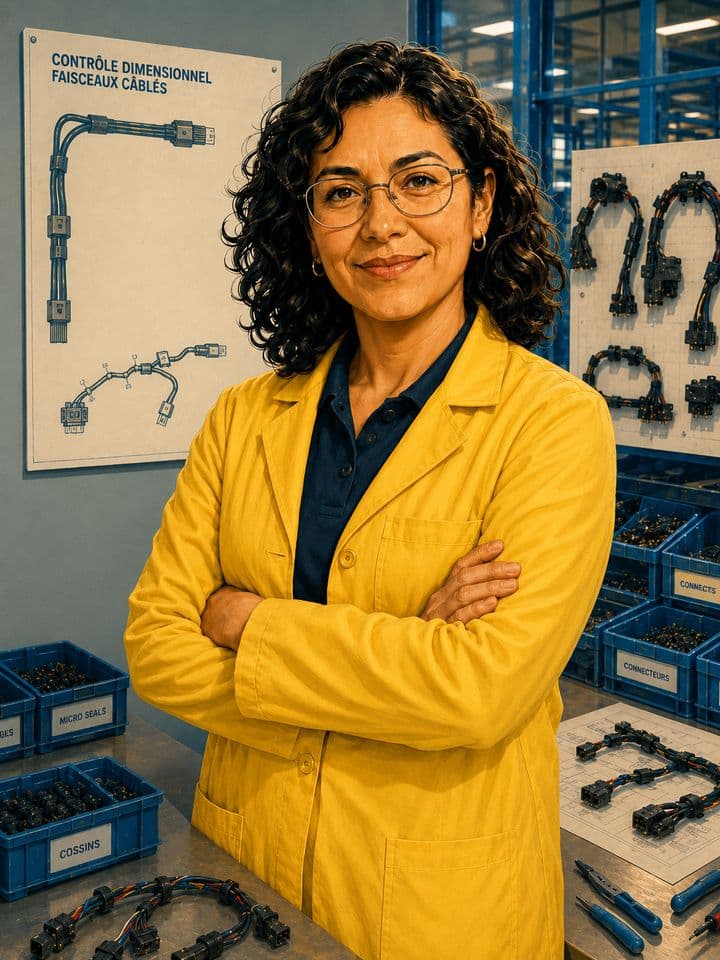
Maria GONZALEZ
Metrology

Julien PAGÈS
Analysis and testing laboratory
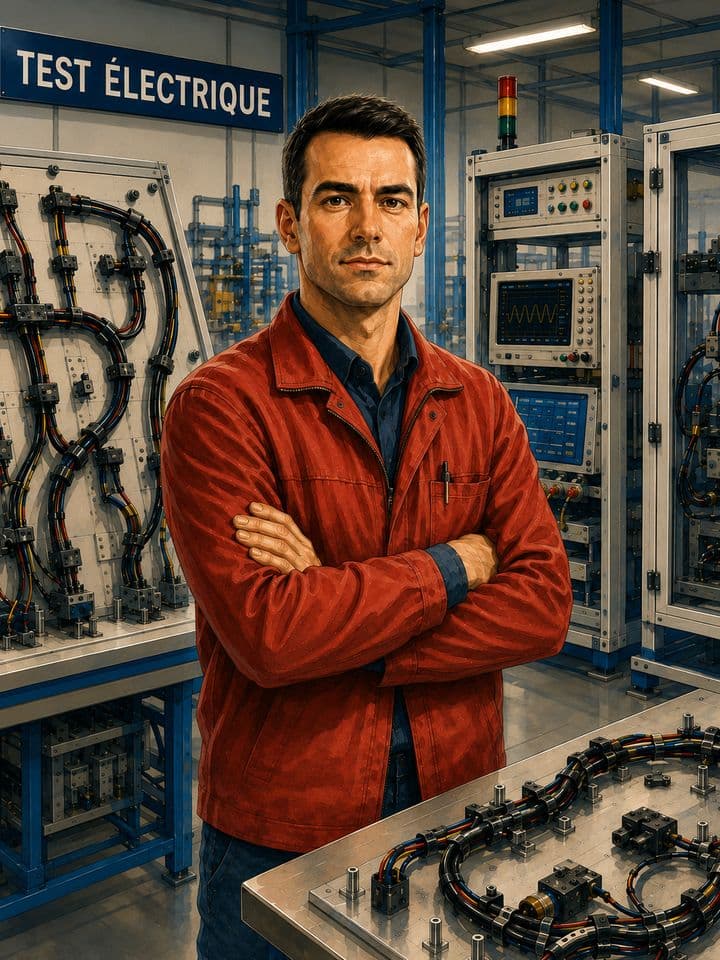
Adrien MOREAU
Electrical testing
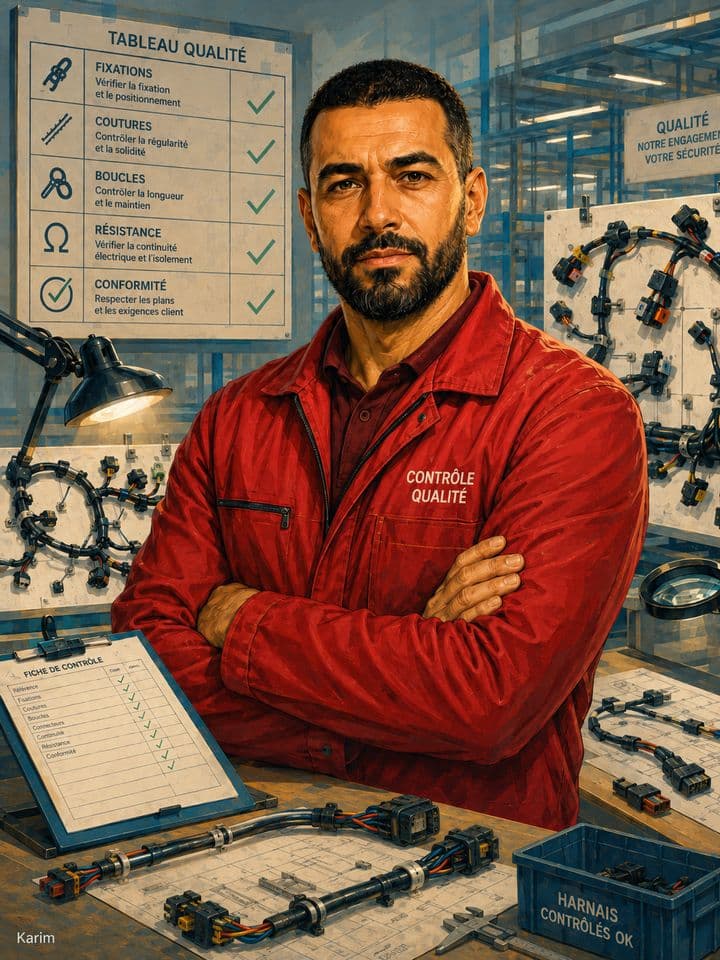
Karim BENALI
Quality control

Maxime LAURENT
Packaging and shipping
Time passes in the game too.
The factory plan changes season as the game goes on. The investigation is conducted in summer; you come back in autumn to check that the actions are in place, then, once winter arrives, to judge whether they have been effective. What is decided in the morning is measured over time.
 Summer · The investigation
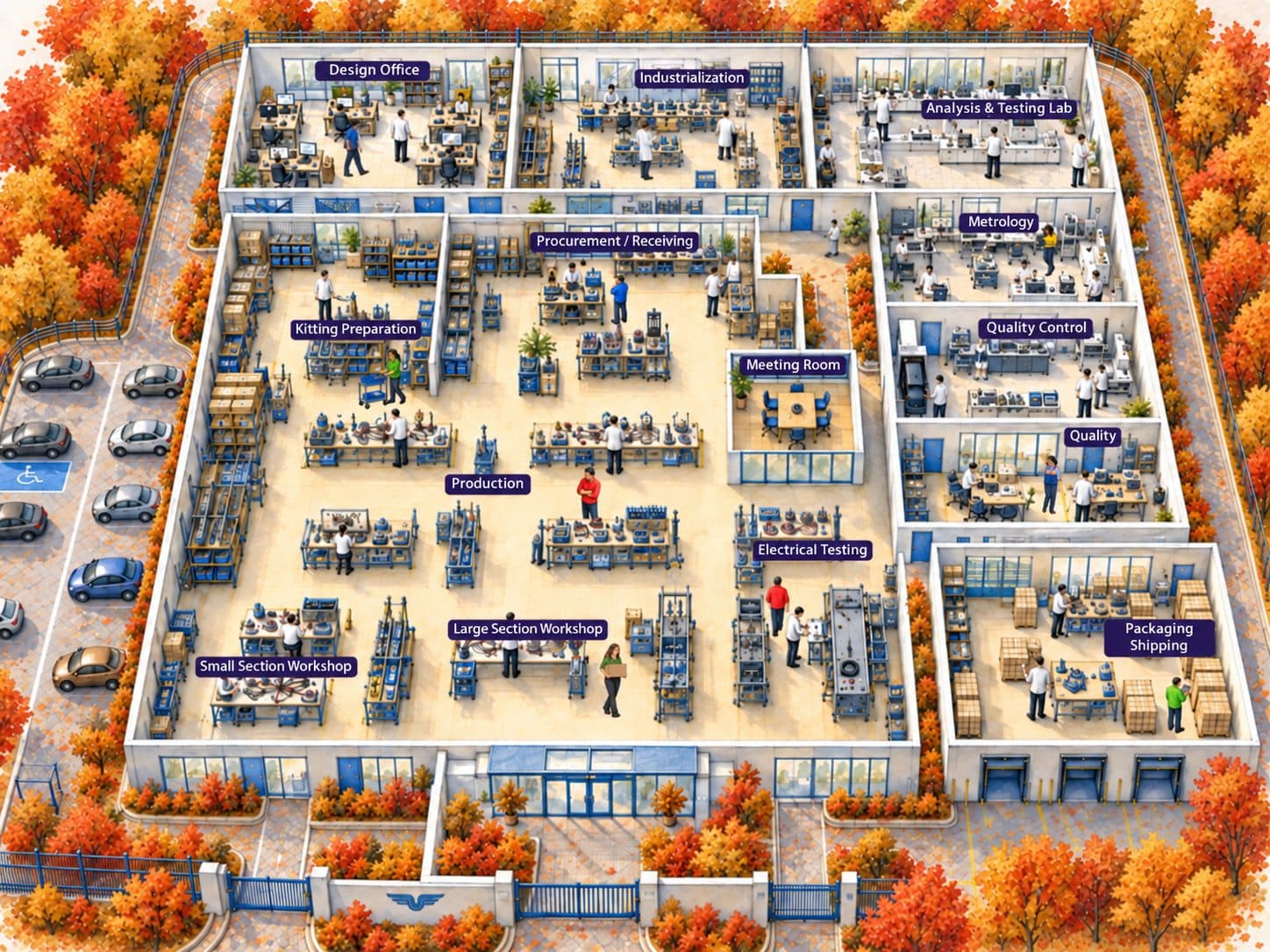
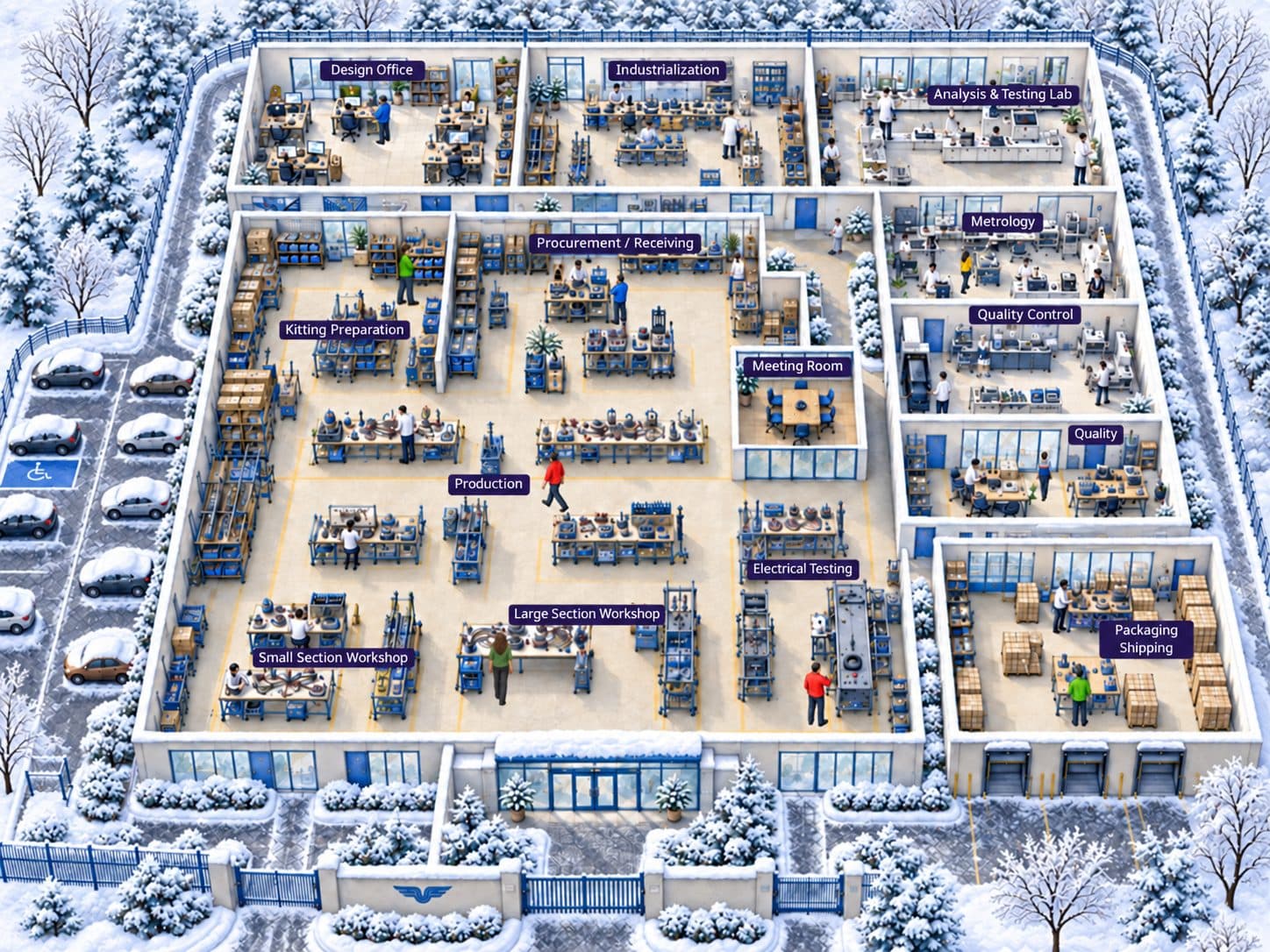
- Factory plan
- Ishikawa(locked)
- Weighted vote(locked)
- Risk analysis(locked)
- Docs
Interface reproduced in this page’s visual identity. The codes and solutions stay, of course, in the box.
Everyone wants to solve the problem. Nobody wants to be its cause.
A problem is never purely technical. Woven into the method, Le Correctif adds a touch of organisational sociology: each participant plays a member of the team, with their own role, interests and constraints. What gets said, what goes unsaid and what gets negotiated around the table are part of the problem to be solved.
On stage
The method
5W2H, Ishikawa, weighted vote, action plan: the team works through the 8D step by step, and every sound decision brings it closer to the goal.
Behind the scenes
The interplay of actors
Each person’s interests, the constraints of their job, alliances and reluctance. As in any organisation, they weigh on the resolution as much as the facts do. The game makes them visible.
Aerolink
Character file
One per player
Your role and your scope
What you know
Your relationships with the other team members
What you have to defend
Roles, not extras
Each participant takes on a function in the factory and defends its logic: what it sees of the problem, what it stands to lose, what it can gain.
What gets said, and what goes unsaid
Around the table, information flows… or it doesn’t. As in real life, the quality of the analysis also depends on what each person is willing to share.
Reading what played out
At the debrief, the trainers come back to the method, then to the interplay of actors. Crozier and Friedberg’s strategic analysis framework sheds light on each person’s strategies, constraints and resources.
A light touch, not a sociology course. It is QALIA Performance’s Q-SYNQ® approach applied to problem solving: what is written on one side, what is actually lived on the other.
What you will be able to do.
Problem solving first, the rest to put it in perspective.
Run an 8D from start to finish
From the customer alert to closure: build the team, characterise, contain, analyse the causes, act, verify, capture the learning.
Understand how the methods work
Grasp the logic shared by the different problem-solving methods, consistent with the ones you already practise.
Describe the facts before jumping to the cause
The reflex that pays off most, and the one most often forgotten: setting the boundaries of the problem with the 5W2H and the IS / IS NOT.
Address occurrence and non-detection
Find out why the defect was produced, and why it got through. Build a plan that covers both, with an owner and a deadline for each action.
Tell implementation from effectiveness
Verify each action in the field, then judge the plan against the objective set at the characterisation stage. And only then re-rate the FMEA.
Read the problem as a system
Spot the interplay between people that gives rise to a defect, hides it or resolves it. An “organisations” perspective, without turning it into a sociology course.
The essentials.
Duration and format
1 day, on site.
Group size
12 participants, in 3 teams of 4.
- Organisation
- Turnkey: game kit and tablets provided, no technical preparation. All you need is a room and a quiet day, free from outside interruptions.
- Facilitation
- Two QALIA trainers run the game. At each step, they debrief, discuss your practices and answer participants’ questions.
- Who it is for
- Quality, production, methods, industrialisation and inspection teams, and anyone called upon to help handle a non-conformity or a customer complaint.
- Prerequisites
- No prior knowledge of the 8D method required. Experience in an industrial environment makes the immersion easier.
- Assessment
- The same quiz at the start and at the end of the day, to measure progress. An end-of-course evaluation, then a follow-up evaluation two months later, on how it is applied on the job. Each participant leaves with two actions to take forward in their own work.
The scenario is written for 12 players: that is the group size that brings out its full richness. A variant exists for a smaller group.
Ask for dates and detailsOne design, several standards.
Le Correctif belongs to a range of immersive programmes built on the same pedagogical foundation.
- 8DThe module shown here
Le Correctif
Resolving a non-conformity as a team. The participant joins Aerolink’s problem-solving team and works through the eight disciplines of the 8D, from the customer alert to the FMEA update.
- EN 9100:2018 / EN 9101:2023
EN 9100 Auditor
Assessing conformity and performance. The participant takes on the role of auditor at Nucleo Dynamics, questions interlocutors played by an AI, and rules on fitness for certification.
See the course - EN 9100:2018
EN 9100, understanding the requirements
Two competing teams, NOVASYN and LYRA, mandated to win a critical industrial contract. The goal: to demonstrate, with evidence, their command of the clauses of EN 9100.
- ISO 10012
ISO 10012, mastering measurement
“Project Solariom” scenario: the participant is appointed by Phoenix Corp to establish a robust measurement management system ahead of its industrial rollout.
- GUM / Métrologie
Evaluating measurement uncertainty
“QALIA Tech” learning game: a dedicated board, mechanics and visual world, to make workable the subject everyone keeps putting off.
Let’s talk about what you need.
Dates, in-house delivery, adapting the scenario to your industrial context: tell us where you stand and we will get back to you.